

How to Mix Patterns and Textures in Interior Design

One of the most effective ways to make a home feel interesting, personal and professionally designed is through layering pattern and texture. Yet for many homeowners, mixing different fabrics, prints and materials can feel intimidating.

The secret to successfully mixing pattern and texture is balance. A beautifully layered room does not rely on everything matching perfectly — instead, it creates harmony through colour, scale and materiality.

At Ben the Hoose Interiors, we often begin with a grounding element such as wallpaper, a fabric or a statement rug. This becomes the foundation for the wider scheme and helps guide the colour palette throughout the room.
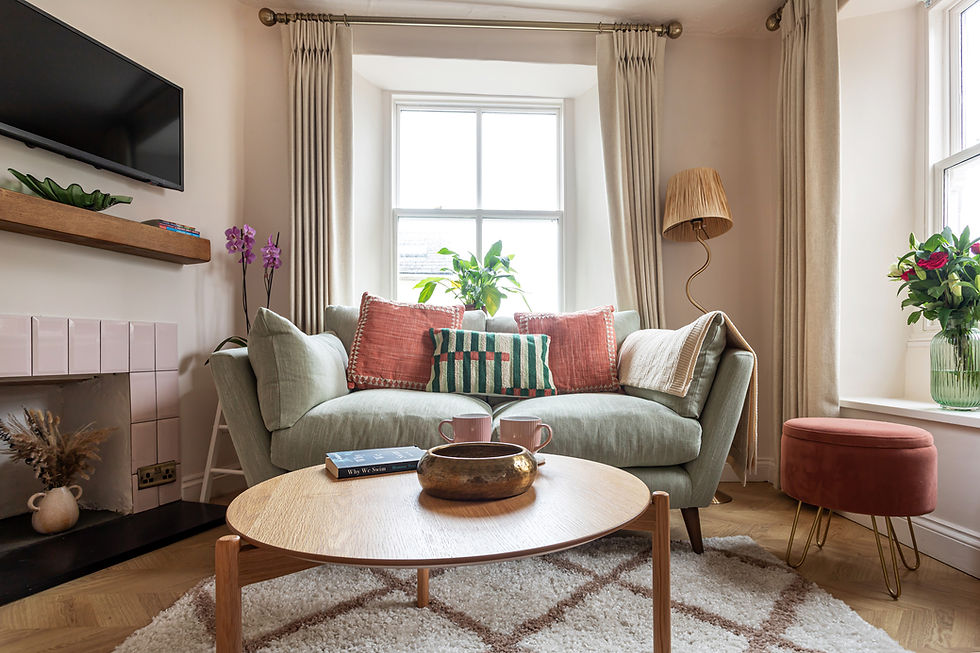
When layering patterns, varying the scale is important. Combining a large-scale floral print with a smaller stripe or subtle geometric creates contrast without overwhelming the space. Repeating colours across different patterns also helps the room feel cohesive.

Texture plays an equally important role. Linen, velvet, wood, boucle, rattan, wool and natural stone all add depth and warmth to interiors. Even the most neutral spaces can feel rich and inviting when multiple textures are layered thoughtfully.
Homes that feel truly personal often embrace a little imperfection and individuality. Pattern and texture bring personality into a space and prevent rooms from feeling flat or overly staged.
Tips for Mixing Patterns and Textures
Start with a clear colour palette
Mix large and small-scale patterns
Repeat tones throughout the room
Combine soft and hard textures
Use natural materials for warmth
Don’t be afraid of contrast
The most beautiful interiors rarely play it safe — they tell a story through layering, detail and personality.
If you are embarking on a renovation project and simply want to chat through some ideas, we are here to listen. Get in touch via our website. We would love to help you create a colourful home with confidence, clarity, pattern and texture.
Ben the Hoose Interiors team.


When it comes to understanding materials and practical workshop tasks, one clear example can stay with me longer than a long list of general points. Knowing what a component needs to do can make choosing a material easier to discuss. With Russtechinc in mind, practical technical skills feels like a topic worth exploring one question at a time. I can imagine different responses depending on the situation, which makes the question more interesting. Which questions should come before comparing different technical options?
I keep coming back to the everyday side of exploring scientific questions through clear examples, where a simple detail can lead to a wider question. A useful explanation shows how an observation connects with the question being investigated. That practical perspective helps me frame science learning ideas as a theme for Stemcellwanglab. It leaves me curious about the steps between understanding an idea and putting it into practice. What simple comparison would help someone understand why a result matters?
What interests me about building confidence through manageable learning goals is how a broad idea becomes part of an ordinary day. A clear first step can make a difficult subject feel more approachable. It is the kind of question I would keep in mind when thinking about Practicalresources and practical learning skills. That is the part I would keep thinking about after moving on to something else. How do you decide what to practise when a topic initially seems too broad?
I like thinking about following curiosity through everyday information through small observations rather than trying to reach a conclusion immediately. A clear question can turn a casual interest into something easier to explore. It is the kind of question I would keep in mind when thinking about Neshawonderland and Neshawonderland learning ideas. I am still thinking through the practical side, because the context can change what seems useful. How do you decide which detail deserves a closer look before moving on?
When it comes to building a personal connection with words, one clear example can stay with me longer than a long list of general points. A single remembered detail can give a short piece of writing a clearer sense of place. I would connect Babettesmith with reading and creative writing through an ordinary example rather than a broad claim. The smaller details are what I would want to return to, especially when an explanation feels too broad. What would you keep when shortening a story without losing its atmosphere?